Show Your Working: The Marketing Advantage of Looking Like You Tried

Polished copy used to be a signal. It meant somebody had spent time, hired a writer, or at least opened a thesaurus. Now it's wallpaper. A competent paragraph can be produced before the kettle boils. That's not a reason to panic. It's a reason to change what you're showing.
The new trust signal isn't 'well written'. It's 'someone thought about me'. Customers are increasingly good at spotting text that has been smoothed into a generic paste. They may not call it that. They just feel a slight nothingness and move on.
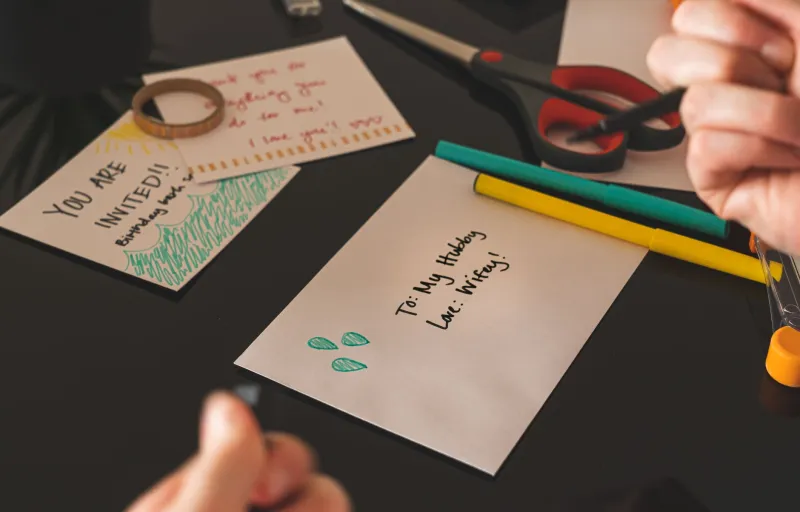
The fix isn't to write worse on purpose. It's to leave evidence of the work. In a maths exam, you get marks for showing your working, not just the answer. Marketing can borrow that. Not as a gimmick, but as a habit: let people see the choices, the trade-offs and the process behind the words.
The tell-tale signs of copy that hasn't met a customer
Generated copy has a particular texture. It's balanced to the point of being boneless. It makes claims that could belong to anyone. It never says who the thing is not for. It has no rough edges, no named compromises, no evidence of a decision.
That's the gap. A customer doesn't need you to be Shakespeare. They need to believe that a human being looked at their situation and made a judgement. For UK SMEs, that is a genuine advantage over the big players, because the big players often can't show their working without a committee meeting and three brand reviews.
The three-part working-out check
One detail that could only come from you
Specific detail is the quickest way to prove there's a brain in the room. Not 'passionate about quality'. Not 'tailored solutions'. Something that would be odd for anyone else to say.
On a website, that might be: 'We keep two widths of bubble wrap because the 60cm rolls fit the boxes we use for framed prints.' In a quote, it might be: 'We've assumed you need the 3mm board. If it's going outdoors, the 5mm is worth the extra £40. We don't recommend the cheaper one for that job.' In a sales email, it might be: 'I had a look at your delivery page and noticed it doesn't mention Northern Ireland. That's the bit I'd fix first; the rest can wait.'
One detail is enough. You're not writing a case study. You're proving you noticed.
A trade-off with a name
Anyone can list benefits. Naming a trade-off is harder, because it means admitting a choice. That's exactly why it works.
Say what you don't do. Say who the product isn't for. Say what the cheaper option costs you in time or hassle. A plumbing firm that says 'we don't do emergency call-outs because we'd rather finish the job we're on' is telling you something real about how they work. A software firm that says 'this isn't for teams under five people, because the setup overhead won't pay back' is doing the customer a favour.
Named trade-offs make your marketing feel considered because they show you've actually weighed something up. They also filter out bad-fit enquiries, which is its own reward.
A process you can see
Process doesn't have to mean a flowchart. It can be a short paragraph, a photo, a timestamp, a note on a quote. 'Your quote is built in three parts: materials, fitting and the skip. The skip is the bit people forget.' That's not over-sharing. That's showing the working.
On a product page, show the step where the thing is checked. In a proposal, show the assumptions you've made. In a follow-up email, say what happens next and who does it. Small, visible proof that the sausage factory has a person in it.
Where to put the working out
You don't need to redesign everything. Start with the three places where customers are most likely to be deciding whether to trust you.
Your website. Look at your homepage and your most-visited product or service page. Add one specific detail and one named trade-off. Not five. One of each. If you have an About page, replace one line of 'we're passionate' with one line about how you actually work.
Your quotes. This is the most underrated marketing document you send. Add a short 'what we've assumed' section. Add a line about what isn't included and why. Add a note about what you'd choose in their position. That turns an invoice-shaped email into evidence of thought.
Your sales emails. Before you write another 'just following up', write one sentence about what you noticed about their business. Not a compliment. An observation. 'Your booking page asks for a phone number but doesn't say why' is worth more than 'I loved your website'.
What not to do
Don't manufacture thought. Customers can smell a fake trade-off. 'We care too much' isn't a trade-off; it's a slogan. 'We don't offer same-day delivery because we'd rather not rush the checks' is a trade-off.
Don't turn it into a memoir. This isn't about telling the customer everything. It's about showing enough of the reasoning that they can see a decision was made. Two or three sentences is usually plenty.
And don't use 'we're human' as a badge. Every business is human somewhere. The point is to show the thinking, not to announce it.
AI can help you get to a first draft. It can't help you notice the thing that only you would notice. So use it for the scaffolding, then add the working out. That's not old-fashioned. It's just good shopkeeping.
The two-minute audit
Before you publish or send anything, ask three questions.
Could any competitor paste their name over this? If yes, add one detail that could only come from you.
Have we named a trade-off? If not, say what you don't do, or who this isn't for, or what the cheaper option costs.
Can the customer see one step of how the thing actually happens? If not, show one step. A photo, a sentence, a note on a quote.
If you can answer all three, you've added proof of thought without adding a sticker. That's the sort of shop we're running here: not a factory of output, but a place where the thinking is visible.