Counter-Sourced: Turning Frontline Chatter Into Marketing You Can Actually Test

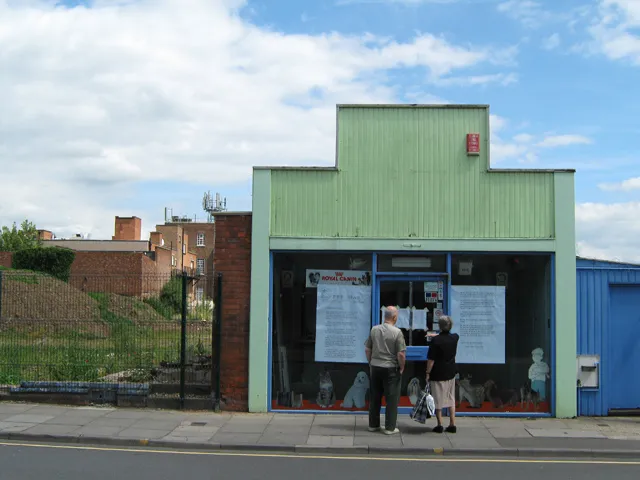
Photo: Alan Swain, CC BY-SA 2.0, via Wikimedia Commons
There's a certain kind of marketing meeting where everyone stares at a blank page and someone eventually says, “We should probably do more on social.” It's not that the people in the room are lazy. It's that they're sitting too far from the till.
The best raw material for your marketing isn't in a trend report or a competitor's newsletter. It's in the questions your team answers forty times a week, the compliments they shrug off, and the tiny frictions customers mention while they're paying. That stuff rarely makes it into a plan because nobody writes it down.
So don't build a suggestion scheme. Build a ritual.
The ideas are already on the payroll
Walk into most UK SMEs and you'll find a handful of people who know exactly what customers are confused about. They know which product needs a handwritten sign. They know the phrase that makes people's eyes glaze over. They know that half the town thinks you close at four on Wednesdays, when you actually close at five.
That's marketing intelligence. It arrives free, daily, and usually gets lost in the gap between the counter and the desk.
The fix isn't a big listening programme. It's a short, repeatable habit that makes those observations visible before they evaporate.
Why the traditional suggestion box fails
Most suggestion boxes are one-way. Someone posts an idea, hears nothing, and concludes that nothing changes. Within a month it's a dusty box with a biro on a string.
The problem isn't the idea of collecting suggestions. It's the lack of a loop. Staff need to see that what they say gets considered, tested, or politely parked — and they need a format that doesn't feel like homework.
A monthly thirty-minute conversation beats a permanent box every time.
The ritual: thirty minutes, three prompts, one page
Pick a quiet slot once a month. First Tuesday before opening. Last Friday after closing. It doesn't matter, as long as it's fixed and short enough that people don't dread it.
Bring a notebook or a shared document. No software required.
Ask three prompts, one at a time:
-
What did a customer ask for that we don't clearly offer?
Not what you wish they'd ask for. What they actually said. -
What did someone praise that we never mention anywhere?
The thing you're quietly good at is often the thing you've forgotten to advertise. -
What small friction came up more than once?
A confusing label. A queue. A delivery promise that isn't obvious. Repeated friction is a marketing signal.
Give everyone two minutes to jot notes. Then go round and capture the exact words where possible — “Can I get this fixed while I wait?” is more useful than “customers want speed.”
Cluster the notes into themes. Pick one idea to test. Give it an owner and a review date. That's the meeting.
The one-page template
Keep it to a single side of A4. A simple table works:
- Date and who was in the room
- What we heard (verbatim quote or close paraphrase)
- Pattern (how often, from whom)
- Idea worth testing
- Smallest test we can run
- Owner
- Review date
The page is deliberately short. If it needs a folder, it won't get used. Photograph it, pin it up, and add it to the next meeting's first five minutes.
Case study: the bike shop that stopped guessing
A small bike shop in Sheffield had been trying to drum up more repair work through social posts. Likes were fine. Bookings were flat.
In the monthly ritual, one mechanic mentioned that customers kept asking, “Can you fix a puncture while I wait?” The shop didn't advertise while-you-wait repairs, partly because the workshop was chaotic in the mornings. But the question came up so often that it became a pattern.
They tested a narrow version: one walk-in repair slot on Wednesday mornings, advertised with a handwritten window sign and a single line on the website. No new software, no ad budget. Within three weeks the slot was fully booked, and two customers said they'd assumed the shop only did repairs if you bought the bike there.
That last detail was the real marketing finding. The shop hadn't just been quiet about a service. It had been accidentally communicating a policy it didn't have.
The fix wasn't a campaign. It was a sign, a sentence, and a diary slot.
Test, don't adopt
The temptation is to treat every suggestion as a strategy. Resist it. Most ideas should go into a small test, not a big rollout.
Use one channel, one measure, and a short window. Two weeks. One sign. One email line. One question at the till. If it works, you've learned something cheap. If it doesn't, you've still learned something, and you can tell the team why.
This is where the ritual earns its keep. It isn't about finding the one brilliant idea. It's about creating a steady trickle of small, testable observations that would otherwise stay stuck behind the counter.
The bit people get wrong
Collecting ideas is easy. Closing the loop is the hard part.
If staff never hear what happened, the ritual dies. So make feedback part of the next meeting: “We tried the Wednesday slot. It worked, so we're keeping it.” Or: “We tested free local delivery. Two orders in a fortnight, so we've parked it for now.”
The park-it-with-a-reason conversation matters as much as the win. It tells people that their observations are treated as evidence, not noise.
Keep the prompts tight, too. A monthly meeting that turns into a general moan about the rota will stop being about marketing very quickly. Stick to what customers said and did.
Start this month
Pick a date. Write three prompts on a piece of paper. Ask three people who speak to customers every day. Capture the exact words. Choose one test small enough to fail quietly.
The best marketing idea in your business probably isn't in a strategy deck. It's behind the till, waiting for someone to ask.